
I was setting up for a shoot inside a parking garage. The client: an engineering firm that designs and installs automated parking systems. This was my fourth mechanical installation shoot for them.
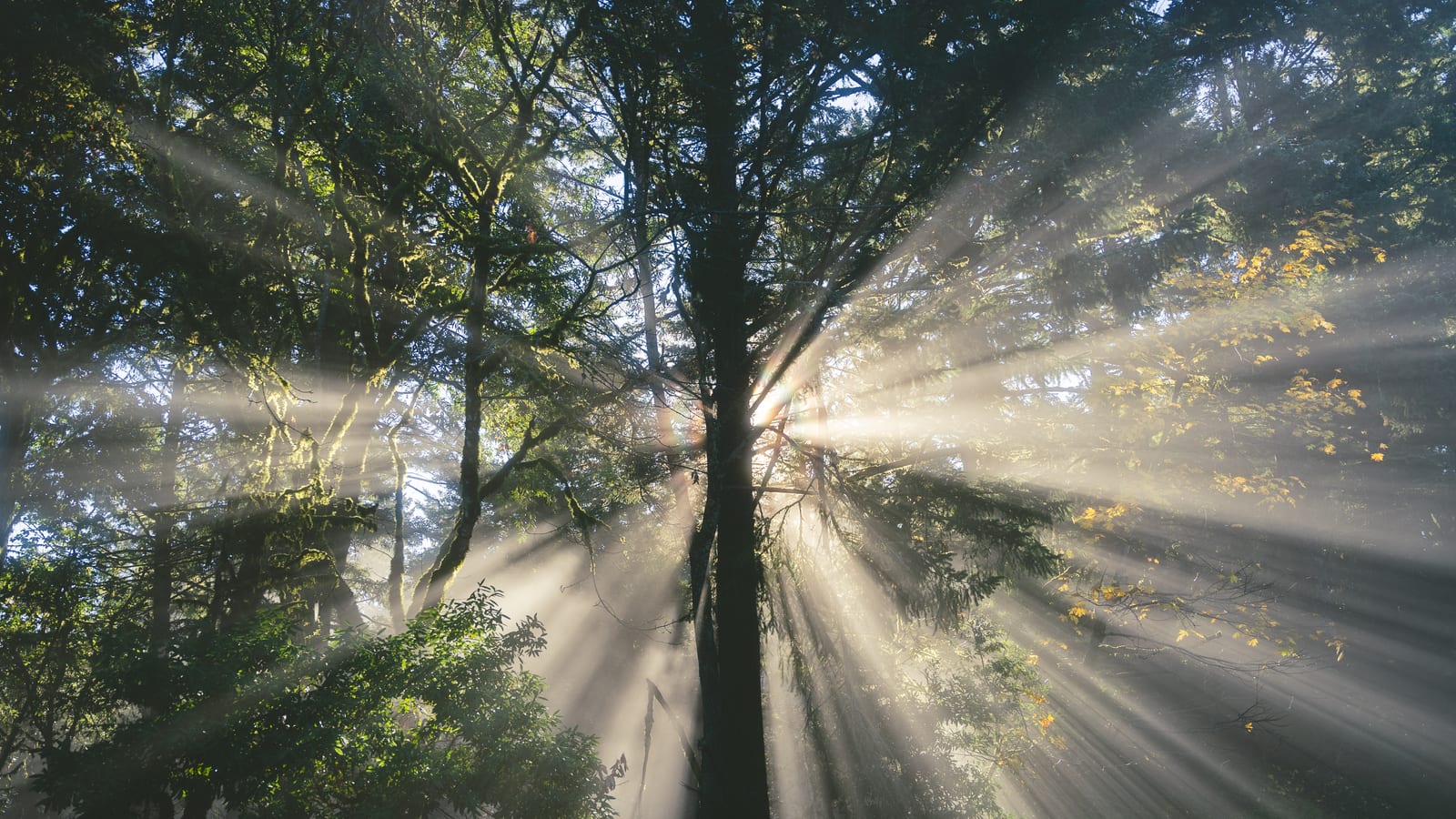
While I was setting up, it struck me that shooting this engineered interior was like shooting a landscape. The connection happened in the moment, an epiphany: columns like tree trunks, the concrete walls like rock faces; light crept in from the openings as if from between forest leaves and branches; light beamed in from above as well, from fluorescents seen through the mechanical lifts, machinery, and stacked cars.
The garage had the light quality of a daytime forest, and it reminded me of the redwoods I hike in.
This realization changed the way I thought about the whole shoot: how I saw shots, where I looked for them, and how I could portray this mechanized space.
Thinking like a landscape photographer became an entry point into figuring out how to shoot these difficult spaces. Even figuring out how to shoot different types of garages.
Some garages are not like forests at all… sometimes they’re caves, and I use a significant amount of strobe lighting to bring out their character in crisp composites.
There are many different ways to understand a subject and know how to shoot it. What to focus on, how to compose, how to light, what kind of wide, medium, and close-up shots to capture.
"When you go to photograph, you have to understand what it is you are photographing." —Sebastião Salgado, photographer
Understanding a subject’s nature helps you decide all that. In fact, for me, once I understand the subject, it feels less like hit-or-miss trials and more like a plan that is executed, hitting the points and portraying the aspects that I know say something about what this subject is, how it works, and how it is used.
I fear writing this out makes it sound abstract and like this rational process. It’s not, and it wasn’t. It’s only abstracted and rationalized in retrospect as I write and think through this now.
During shoots, it’s more instinctual and inspirational, built out of creative flow and epiphany and subtleties and experience. It’s a well of things swirling around that are hard to describe (and what works for me isn’t the only way to understand a subject).
How do photographers approach a new subject they haven’t shot before? How do you go from uncertainty to understanding that subject well enough to capture its nature over a set of images?
No one seems to talk about how they get there. One reason is, I think, a lot of photographers do this subconsciously and automatically. It’s challenging to dissect your thinking and artistic process and not really necessary to a successful shoot. But I think doing so helps get at what makes photography special and the essence of what a photographer does, even making a parking garage approachable.
A Photography Mindset Is Software You Load to Understand Your Subject
A photographer controls lighting, timing, angle, perspective, lens length, composition, placement, layering of a scene.
A photographic mindset governs the decisions in regard to all these elements.
I’ve shot many different landscapes over the years, and I love mountains, ocean, desert, and forests. Forests are dark, low-light environments, but they also have complex light, maybe bright sunlight coming through the leaves and spotting the ground and the branches. So you have this intense sunlight and these deep shadows.
The skill in shooting this high-contrast scene: a tripod, bracketing, and taking shots with different exposures to make a composite later in post so that the highlights and the shadows are properly represented. Timing and reading conditions are also skills. What time of day you shoot and what the weather is doing. Sunny day versus overcast. All this makes a difference.
A mindset encapsulates the whole experience of shooting many landscapes in many different light conditions into one idea.
I build my approaches to different subjects out of ideas and epiphanies like that, based on what I shot before or how I understand the nature of different subjects. Then I build on that with the new subject and the new challenges it provides.
It’s like a cake, each layer another level of experience that keeps stacking upward.
Another way to think about a mindset is that it is an adaptable piece of artistic brain software you load up to understand a subject and adapt your approach and methods with that subject as you go.
Garages Are Ugly. How Do You Find Their Beauty Anyway?
At first glance, garages are undesirable places, with not that much to offer. Little to no light. Dirty, dark, boxy.
"I find it challenging to extract beauty out of something that most people would dismiss as being uninteresting or just kind of ugly." —Christopher Payne, photographer
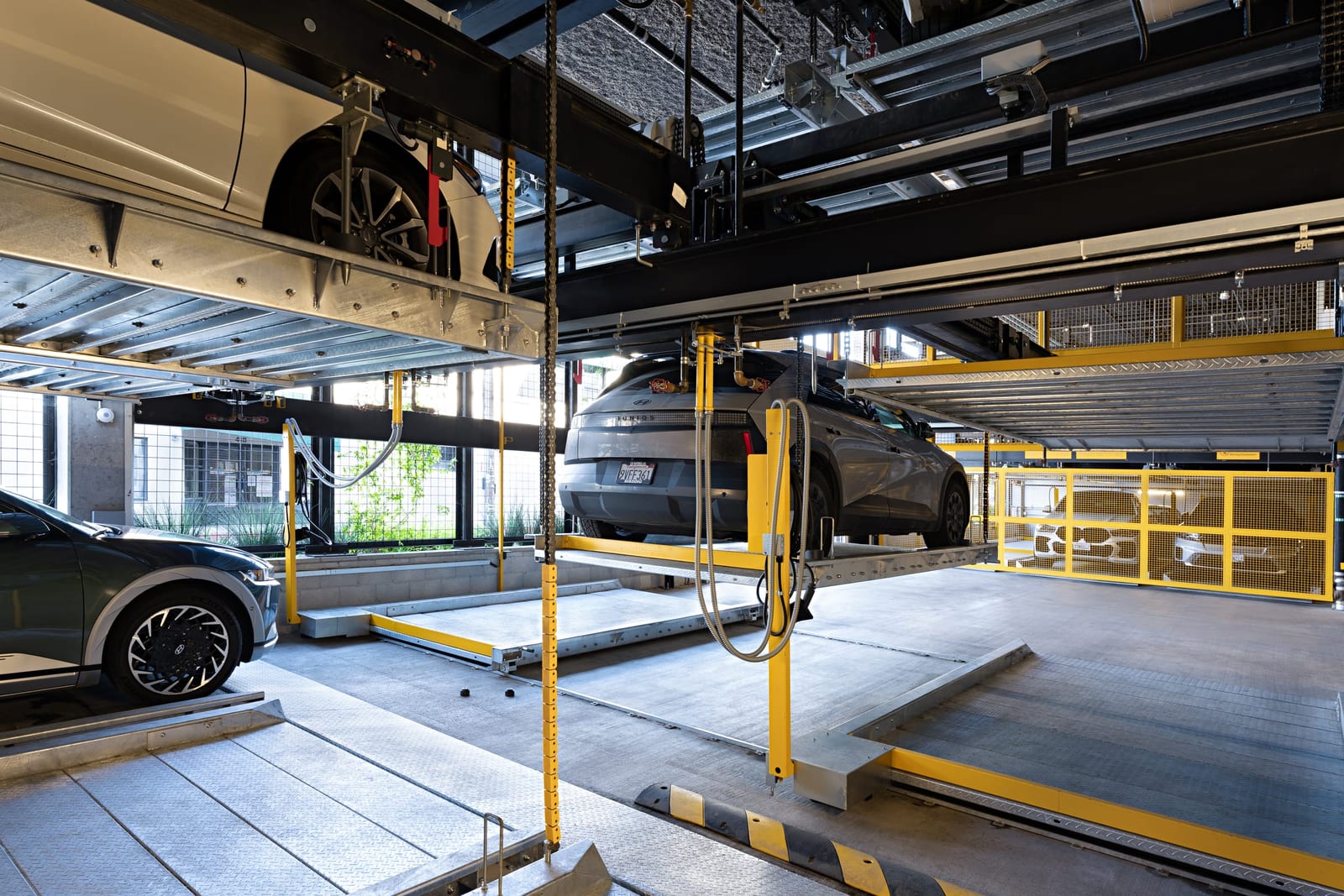
The first parking garages I shot were amenities for residential apartment buildings. Same feel, different subject. For the engineering client, the mechanical parking systems inside these residential garages included platforms that lift, slide, or shuffle cars around the floor, or up several stories in the air, and even hide them below ground, so more of them fit in the same cubed space. This was a whole new subject for me. And I was excited about it because it presented challenges I hadn’t faced before.
The epiphany at the fourth garage installation is what let me into the beauty of it. The industrial beauty. Suddenly I wasn’t trying to make an ugly space look good. I was just trying to know the subject from a starting place and branch out my shooting from there.
The landscape mindset helped me do this.
At first glance you’d look at an industrial space as dead and sterile machinery. But like landscapes, industrial spaces are alive too, in a mechanical sense: cars in and out, lifts going up and down, people walking through, lights, noise. And when there’s no one in there, it’s still and quiet, like a forest floor.
"I discovered that everything is alive. A landscape is alive; this mountain is as alive as I am; all of these trees are as alive as I am." —Sebastião Salgado, photographer
Anyone can copy a composition. The question is how you capture a space’s movement, action, and purpose. How do you show that it’s alive?
Showing a Space’s Movement and Action
Forests have life and movement, animals on the move or being still, like a deer cautiously gazing at you.
In a garage there are still parts and moving parts too. A mechanical system is alive when in use and still when at rest. So portraying both states shows its functionality.
Motion-blurred cars entering the garage or passing through the system. Gears and chains at rest. A finger about to press a control button.
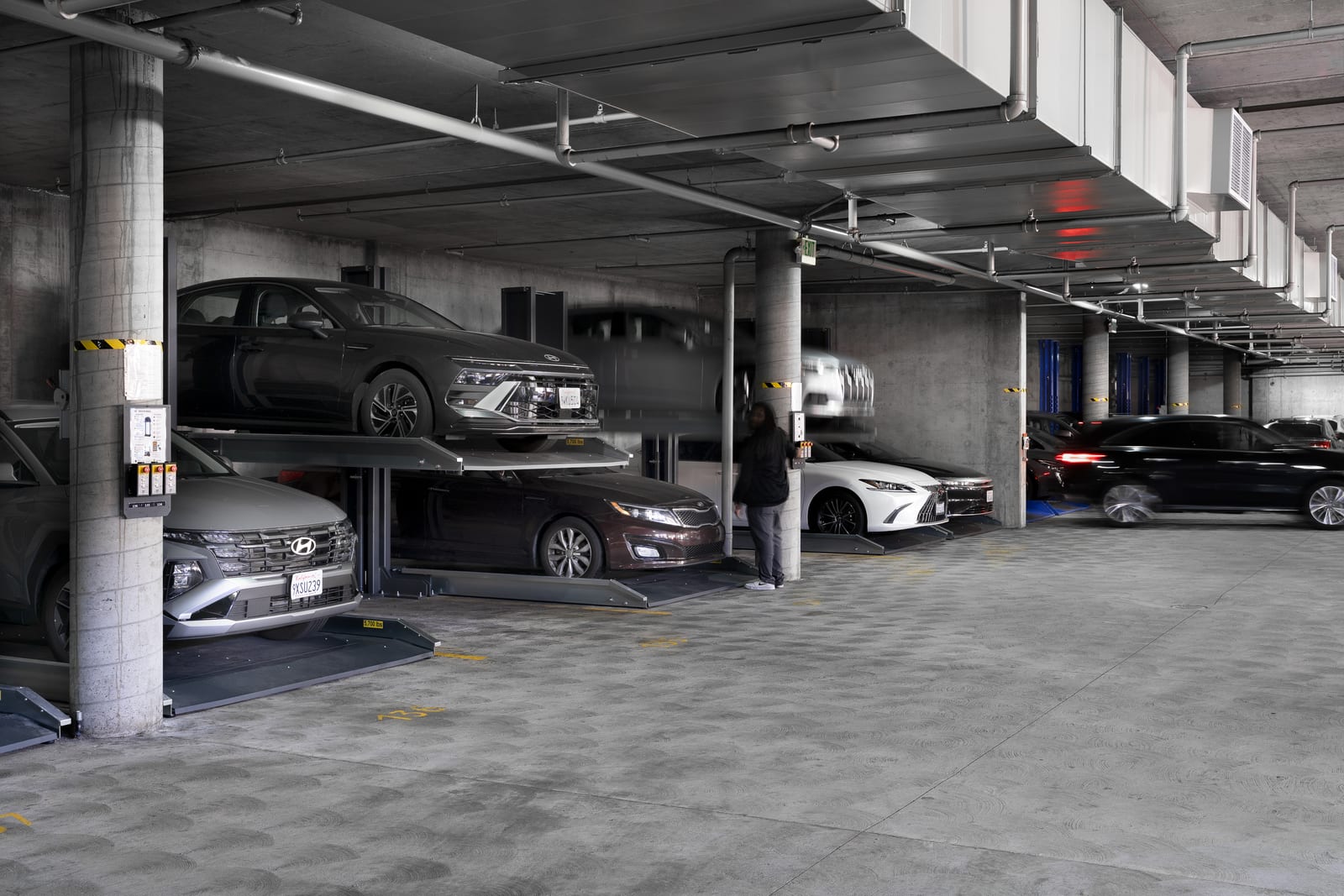
In a forest you might have a hiker walking through redwoods, and this shows the scale of the trees. In this commercial shoot, scale wasn’t as important as usage and showing a person at the control panel.
I think about how the space is used. If it’s an automated car system, how do you show what that system does to the car? How do you show how it moves the car, how it takes care of it, how the car sits on a platform? If there are doors, you show the doors open and closed. If it’s a chained system, or a pulley system, how do you show that?
If there are control boxes, I have the client or my assistant press the buttons and I light that. Car taillights, headlights, anything to make it interesting. At Monterey, the fifth garage installation, I caught motion blur of the technician at the controls and the car rising on a rack among the other stationary platforms.
Figure out its function and how it is used, and you’ll understand its nature.
And understanding its nature will tell you how to shoot it.
Light can also lead the way to this understanding.
The Gift of Natural Light
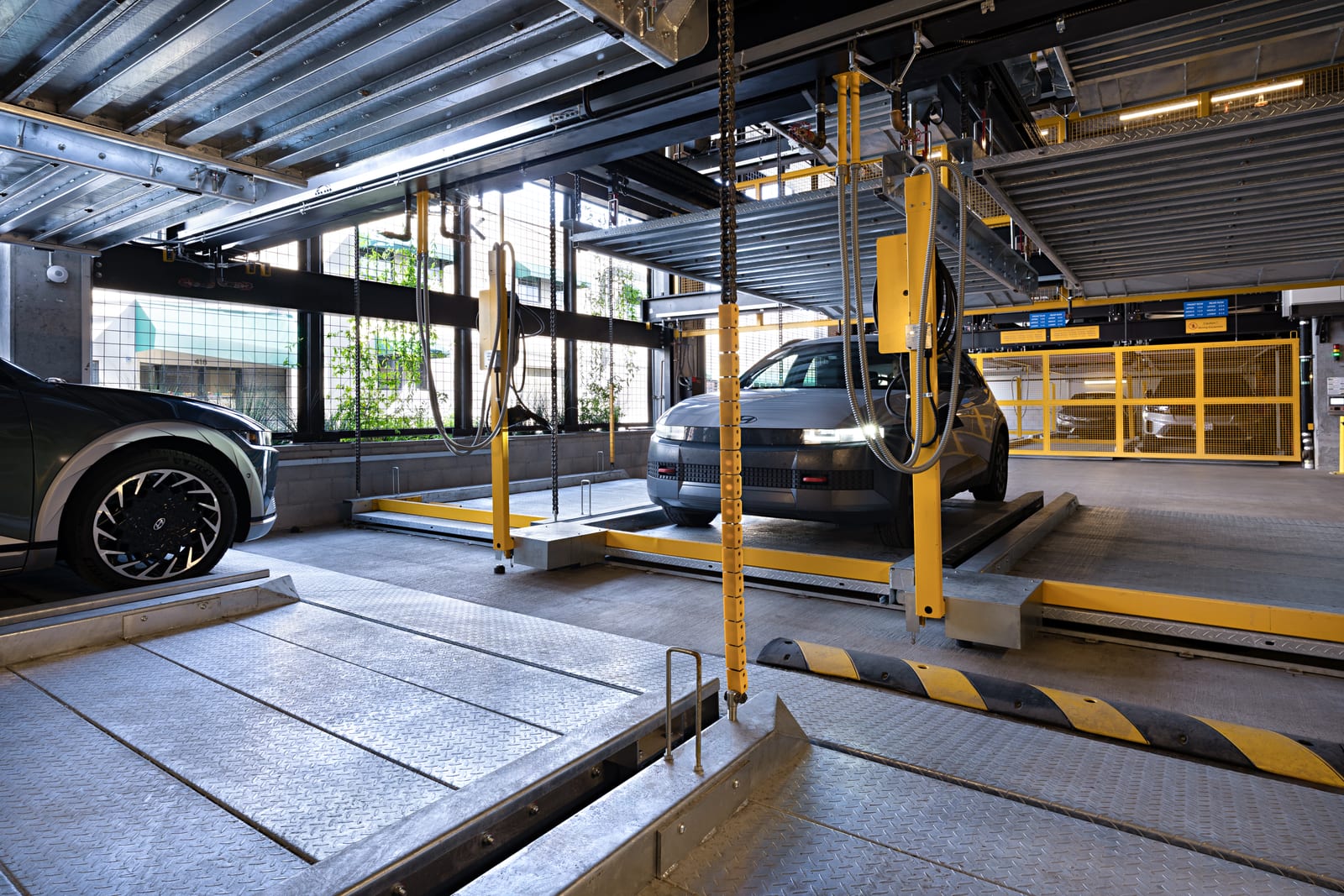
Felix, where I had the forest epiphany, was a ground-level garage with openings to outside natural light, the best kind. So I picked a parking section next to the openings and mixed daylight with strobes.
There was enough daylight in that part of the garage to skip the strobes for certain angles, as I did for the headlights shot (see above). The client had her car washed for the shoot and drove it onto the platform. I shot five brackets and a single exposure of just the outdoor scene. In the composite I made the outside bright, a bit overexposed, because that’s what it looks like from inside a garage.
At the first garage installation, Hunters View, the main level was also above ground and the openings faced east, and I knew we were going to start before sunrise, at 5:30 or 6 a.m. What I didn’t have was a single picture of that east-facing wall, so I didn’t know how much light would stream in through it. So I planned the whole shoot around it in case it happened. Everything was set up to use that light if it was there, and if it wasn’t, I had plenty of strobes and gear to do something else.
The sunrise came right through the openings and flowed diagonally across the spaces that had been cleaned for us to shoot the system. It was lovely, and it is still my favorite of the garages I’ve shot. Sunlight streaked across the car. It was like the sun coming through rocks, or a tall forest.
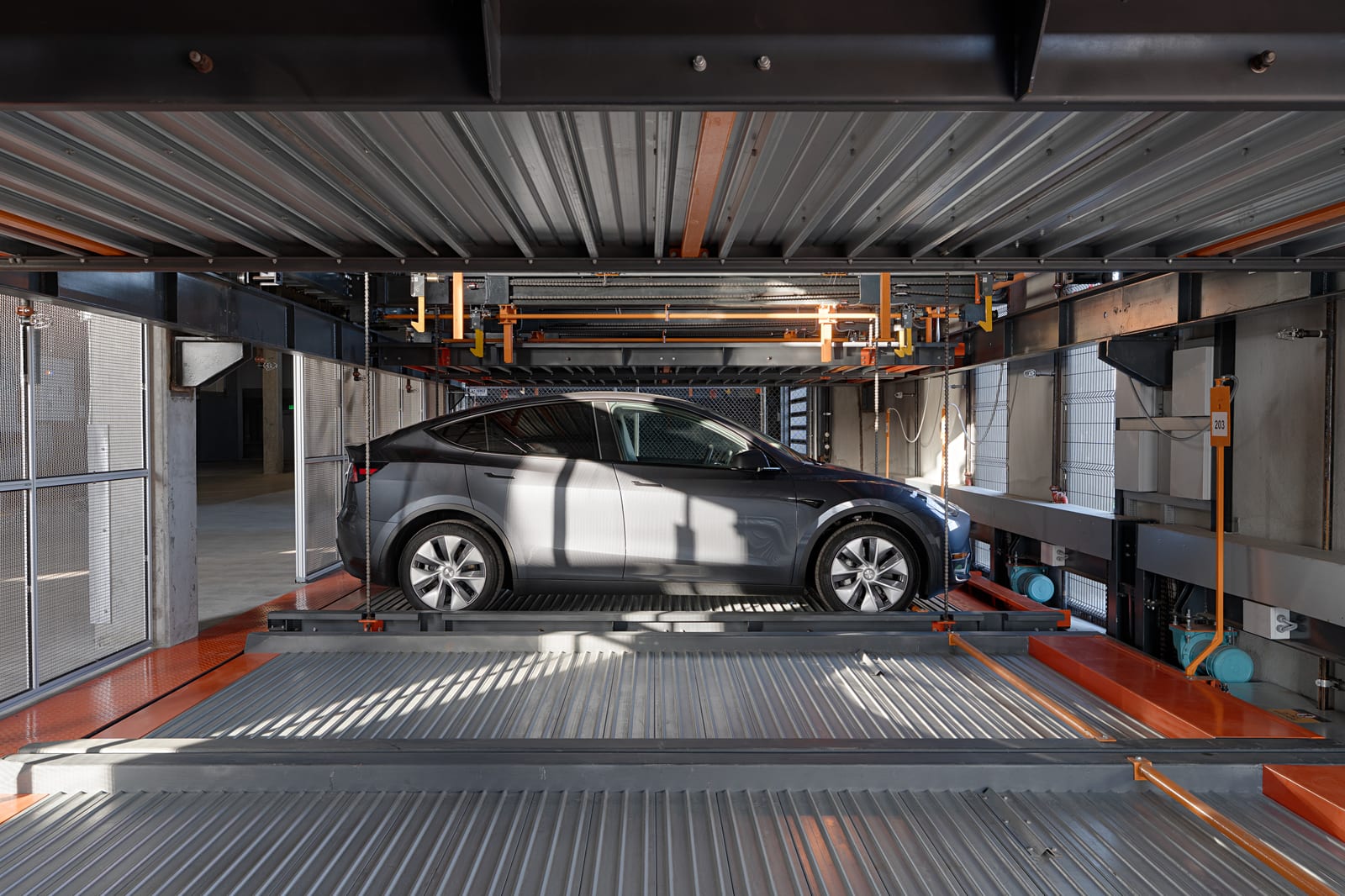
I didn’t think of it that way then.
At the first three garages I did a ton of extra shooting and coverage because I was just learning what worked and what the client wanted. There is a freedom to that but also the fear of searching for the shots.
The garages after that, Felix and Monterey, were much more focused. I spent more time on the shots I knew would work.
I once did a study where I shot every sunrise and every sunset for ten days and posted the results. You get a taste, and you create your own taste for good quality of light. Sometimes it’s softer. Sometimes it’s harder. Sometimes it’s filtered. Sometimes it’s layered with different intensities of light coming through different layers of the photograph. That is beautiful and painterly, and it’s something you can find in forests. This was one layer of the cake, one method in the mindset software, a great foundation for approaching subjects.
Another is the apprenticeship: assisting on architecture and interior shoots, where the lead photographer designs ways to layer the light in a scene with strobes or continuous lighting, and you implement it. Some of those photographers like the late afternoon light that comes in through windows at an angle, and late morning light, using it to layer a space and make it look beautiful.
The reps in landscape and the reps as an assistant. You figure light out.
You learn how to read it.
And create it.
Is there an opening for natural light? I always look for that first. I ask the client for any photographs they have from the build, and I correlate those with a sun study that maps the light coming into the building throughout the day. Then I try to time the shoot for the best light streaming in, if it has any.
Most garages don’t.
Dark Caverns: Switching From Forest Shooting to Cave Shooting
The Monterey installation was not a forest. It was a cave with one light-source opening that was too dim to matter. So you switch from forest thinking to cave thinking.
The mindset adapts.
Fluorescents above, a little distant daylight, and otherwise all concrete. You can’t get good coloring on the cars in a space like that. So I set up multiple high-powered strobes down the line of the system and flashed them between the parked cars. As the lights sat farther from the camera, less of their light reached the lens, so the lighting had a layering effect down the row. Clear and sharp.
In a cave, sometimes you have to create the light to show what’s there.
The best shot from that garage is a column with a control box on it. The columns are like giant tree trunks in a forest. The column is in shade, and I wanted separation between it and the background, where there’s a car on either side.
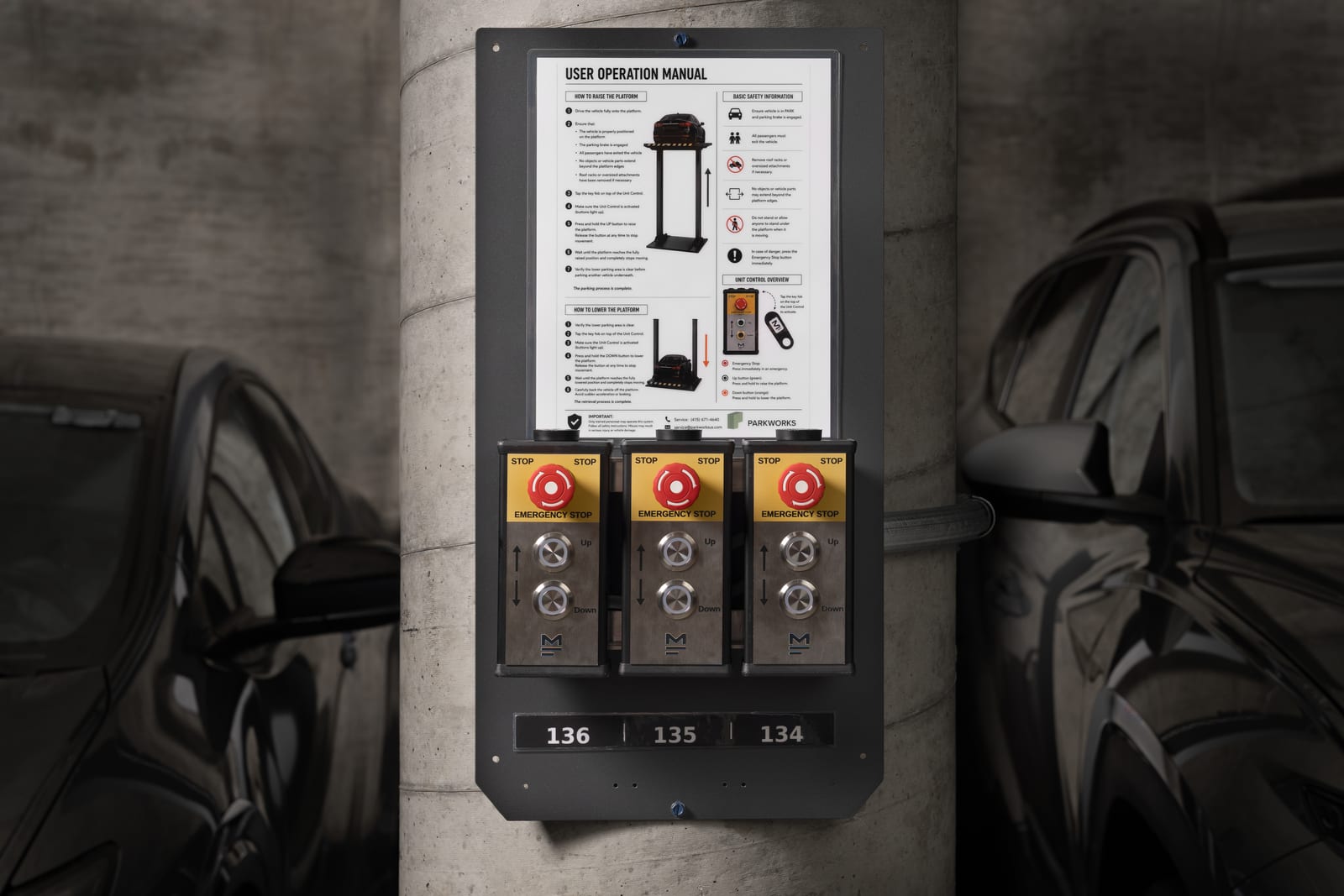
I started by lighting only the panel and the column, and the background went completely black. I put a fill light on the right, which brought tiny bits of detail into the background, still mostly black, and now the shadow on the column looked good. You get this three-dimensional tree-trunk shape. I used a honeycomb grid to scrape the light across the texture of the concrete and the control box, to emphasize the steel and the concrete, and the strobes brought out the simple colors on the box. Then we took two more strobes, hid them behind the column, and lit the two cars. I had my assistant adjust the strobes up into the ceiling above each car so the light fell down onto it, and I thought those were the frames I’d use.
But in post, I noticed when the light shot up over one car, the opposite car looked good. So I ended up using the opposites for the composite, which was not what I expected. But it worked.
That was the longest single shot of the day, something like ten frames, and two or three hours of editing on one photograph.
Shooting it was like shooting a tree in a forest and having the focus be on that tree. But the lighting was portraiture: a key, a fill, and two rim lights. And the composite technique was architecture. Of all of them, this one is the least like a landscape photograph. It was more like shooting a tree inside a cavern, and using lighting and shadow to emphasize the column.
Using Darkness and Shadow to Emphasize the Subject
The third garage installation, in San Carlos, had lighting design inside the actual parking system, so I got inside the system and used its own lights as the source to set the mood and tone. I was able to make it look sci-fi and cinematic.
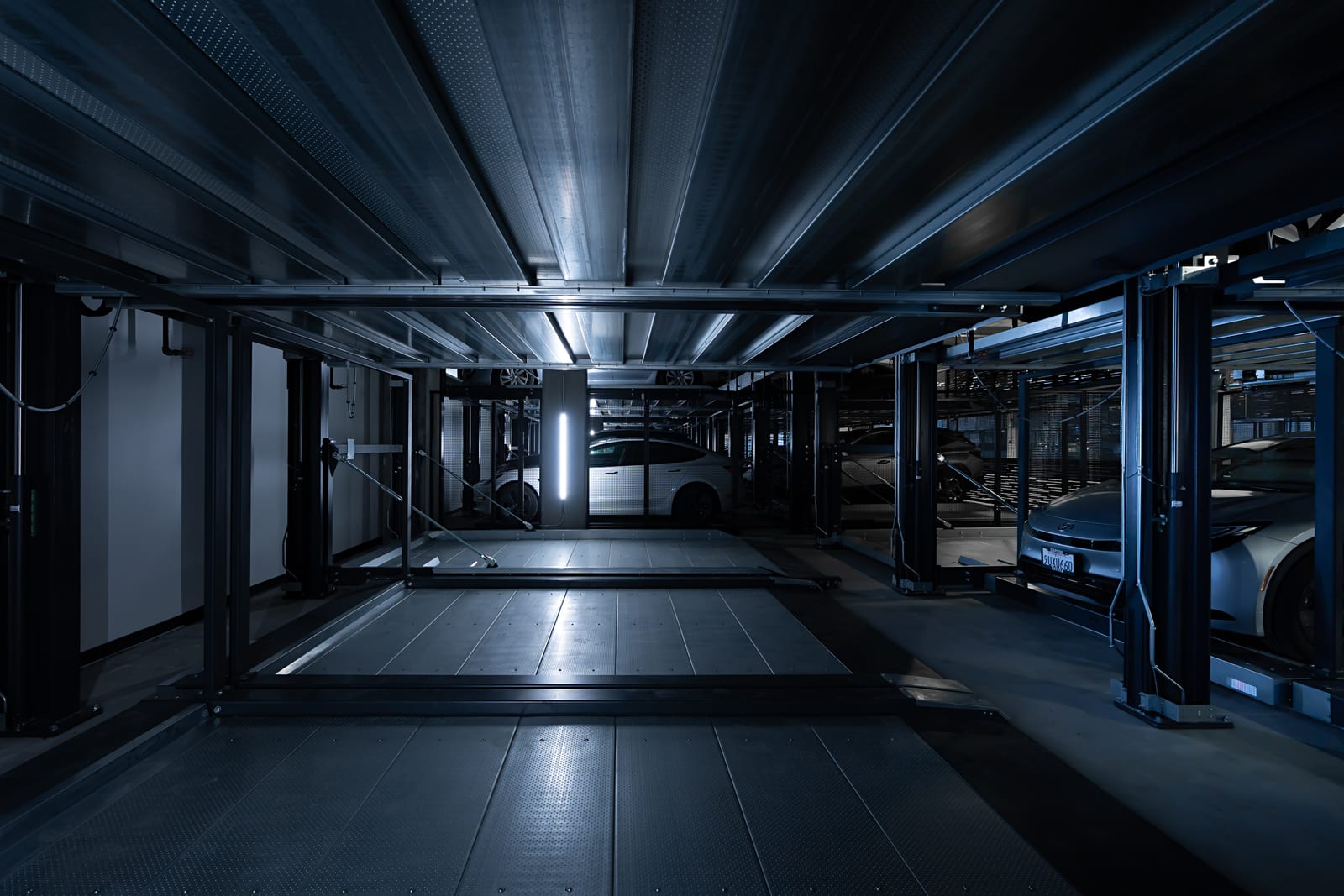
I’m careful not to make these spaces unrealistically bright. You want the places that are dark to keep some of that shadow. On the Monterey column, I left the car segments on the left and right darker. It just looked better to me.
It’s okay to use darkness and shadow as you would use light. It can help craft the mood, make objects and machinery look three-dimensional. Leaving aspects of the image dark, I can veil the parts of the garage that don’t flatter the photography or the place. Traffic cones packed into a corner, elements that don’t contribute to the subject.
You can let go of detail in the shadows more in these spaces than you would in an architecture or luxury real estate shoot.
"When possible, I use dramatic lighting to focus on the worker, to create theatrical effect, and also to obscure all the visual clutter that is omnipresent in factories." —Christopher Payne, photographer
You can also play with dramatic and cinematic lighting like Payne does, either using the light that’s there or creating your own to capture the feeling and emphasize different parts of the space’s nature.
This is also the mindset at work.
Layering All the Experience: What a Mindset Accomplishes
The first time I shot one of these garages, I felt like I was going beyond my creative capacity, pushing into uncharted territory. I didn’t exactly feel like I knew how to shoot a space like this. The experience is similar to approaching the blank page on a new topic. Even though you’ve written before, a new subject feels a bit like the first time all over again.
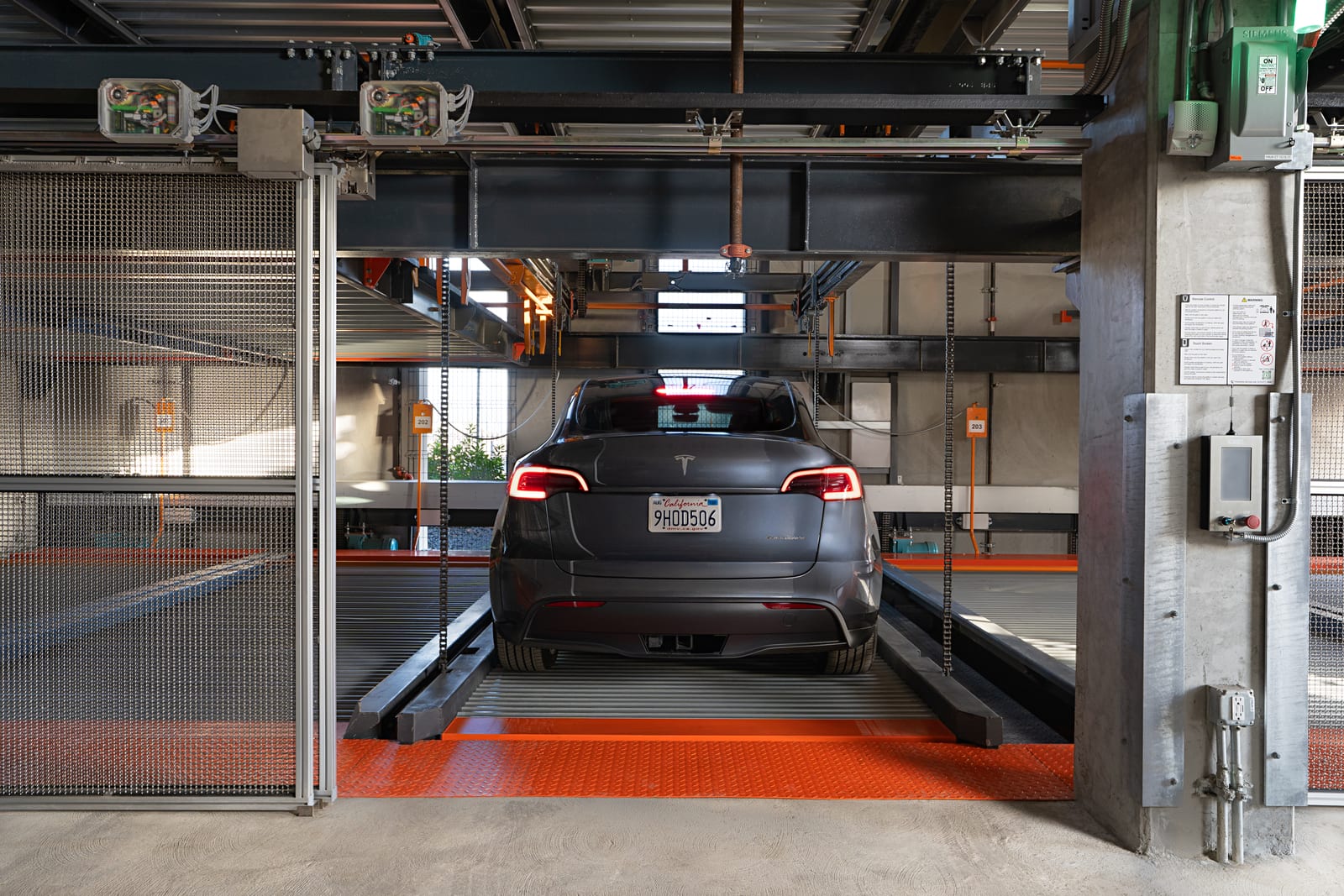
I use architecture techniques in the composite and in the lighting. I use luxury real estate framing for the one-point and two-point shots. I use car photography to place the car so it takes on desirable reflections on the platform and not distracting overexposed pieces of light. I use portraiture lighting for the mid-range and close-up shots of the panels and the things people interact with. Motion blur is an architecture and lifestyle technique. And I use landscape knowledge for thinking about the space, the sense of the space, and what light exists in there.
I’m using the entirety of my experience as a photographer to approach a challenge like this and to find solutions for this environment.
The process begins with learning about the subject in some way. Knowing what you’re shooting and then connecting with it. For me it was the forest light epiphany that let me into the subject. Once you have a starting place like that, you can branch out from there. This liberated me to shoot these spaces without struggling and guessing on every shot. It let me see their beauty, connect with it, and try to capture it.