
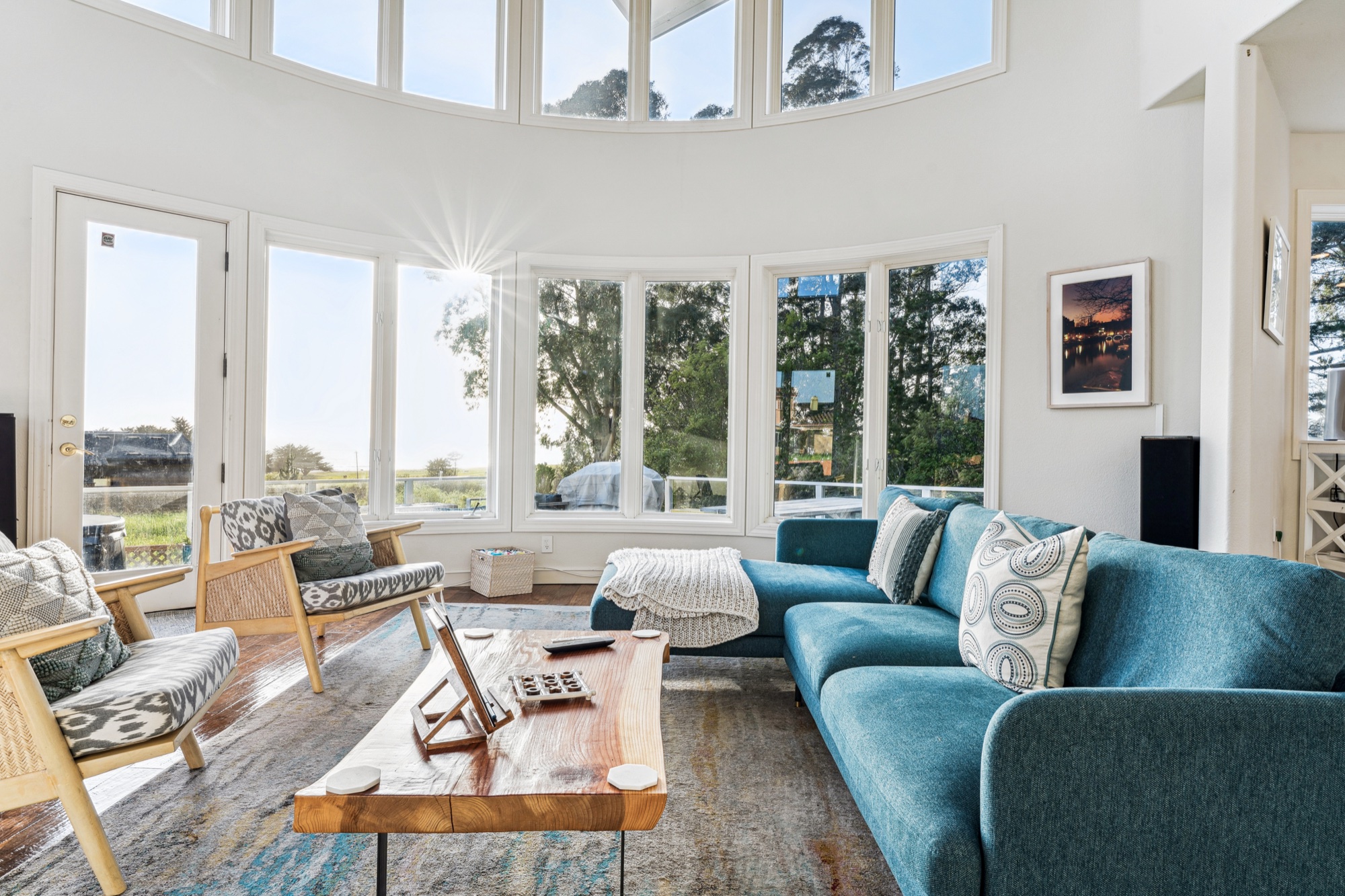
On my first interior shoot for a designer, I was in Woodside, shooting a vineyard estate. The designer had remodeled all the interiors of the property. During the shoot, she also styled all the spaces as we went, moving from room to room, arranging flowers, throwing drop blankets on beds, and making sure the fireplaces were on.
We orchestrated our path through the home based on where the best light was. Then she got to styling, and I followed behind, noticing what differed from our walk-through, and capturing the features of each room.
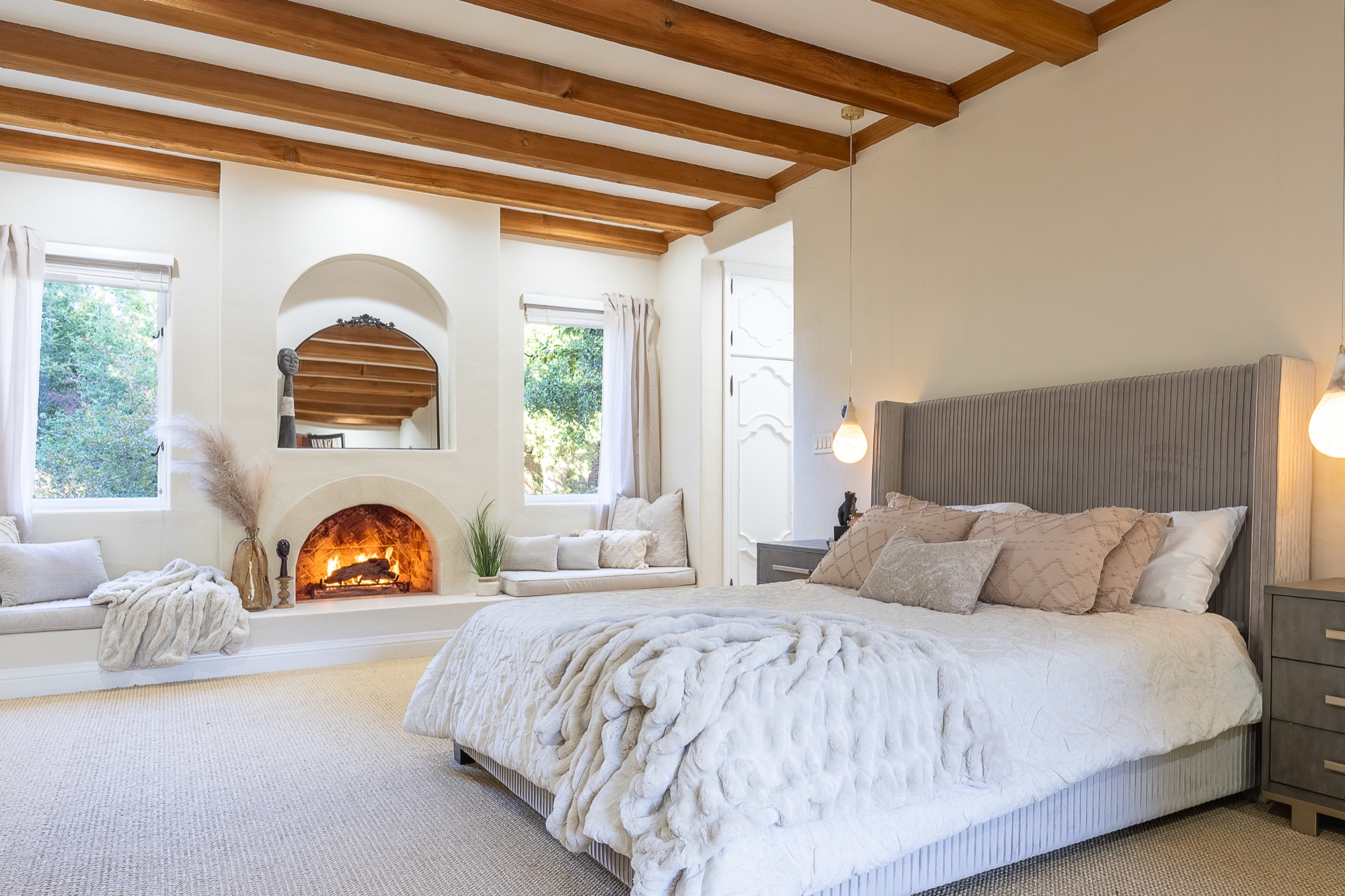
One of the first shots was the living room. The designer asked me for a shot behind the couch, facing the fireplace. Her intent was to capture the room's luxury and the coziness of the couch's association to the hearth. But I found the couch too tall—the couch's back blocked view of the fireplace and became the frame's centerpiece.
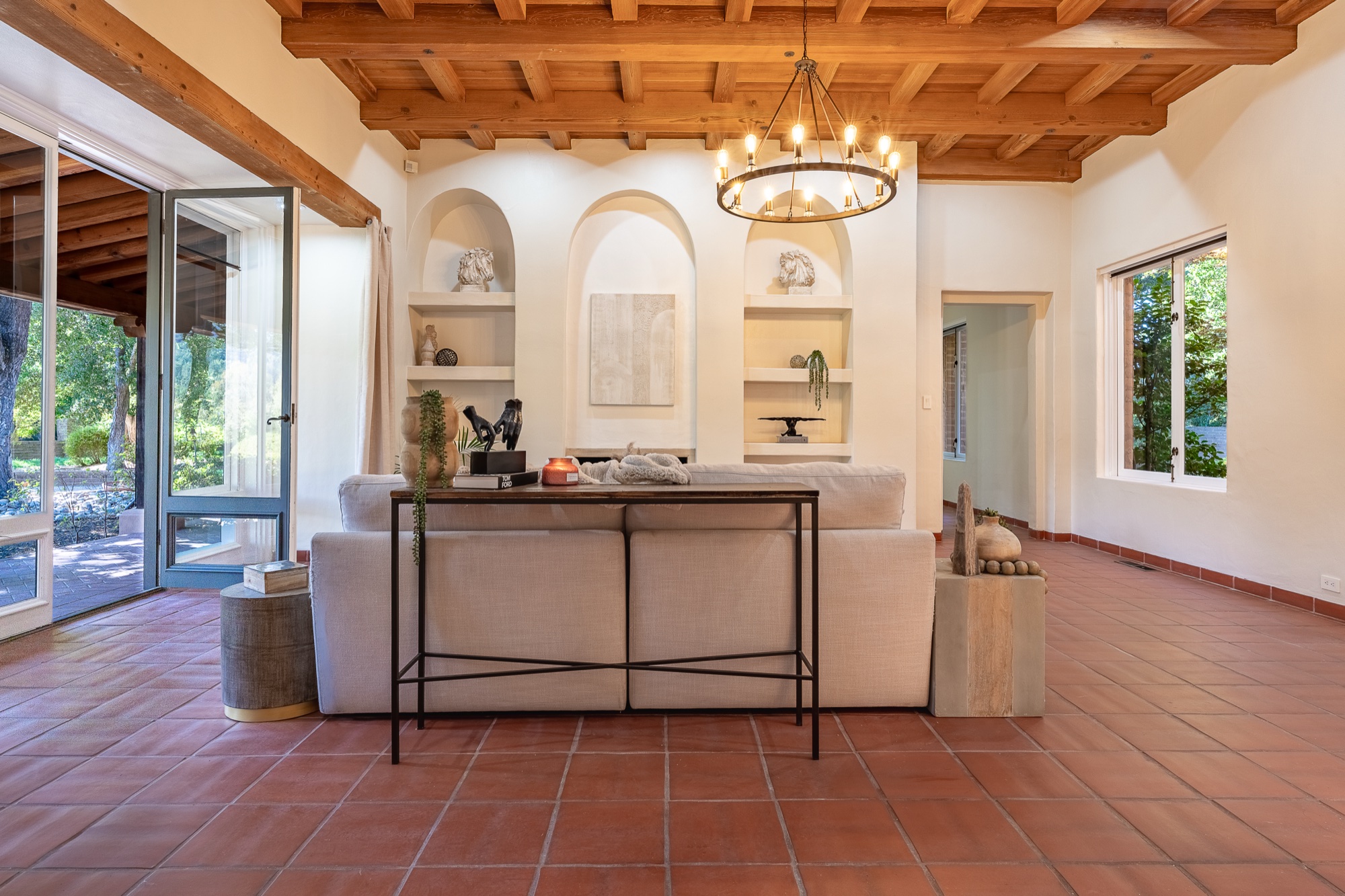
As we briefly spoke about the shot, she asked if I could angle the camera down, and still capture the couch; I explained this would distort all the vertical lines in the room. She agreed that would be distracting. I told her that the idea was capturable, but the position from the back of the couch presented more problems for a camera than the eye.
The shot couldn't say what she was trying to express. But what other angles/shots could?
I thought, let's capture all the angles that show the couch in relationship with the hearth and fireplace, the chandelier lighting above, and pick positions that allow these elements to layer themselves in a pleasing way in the image.
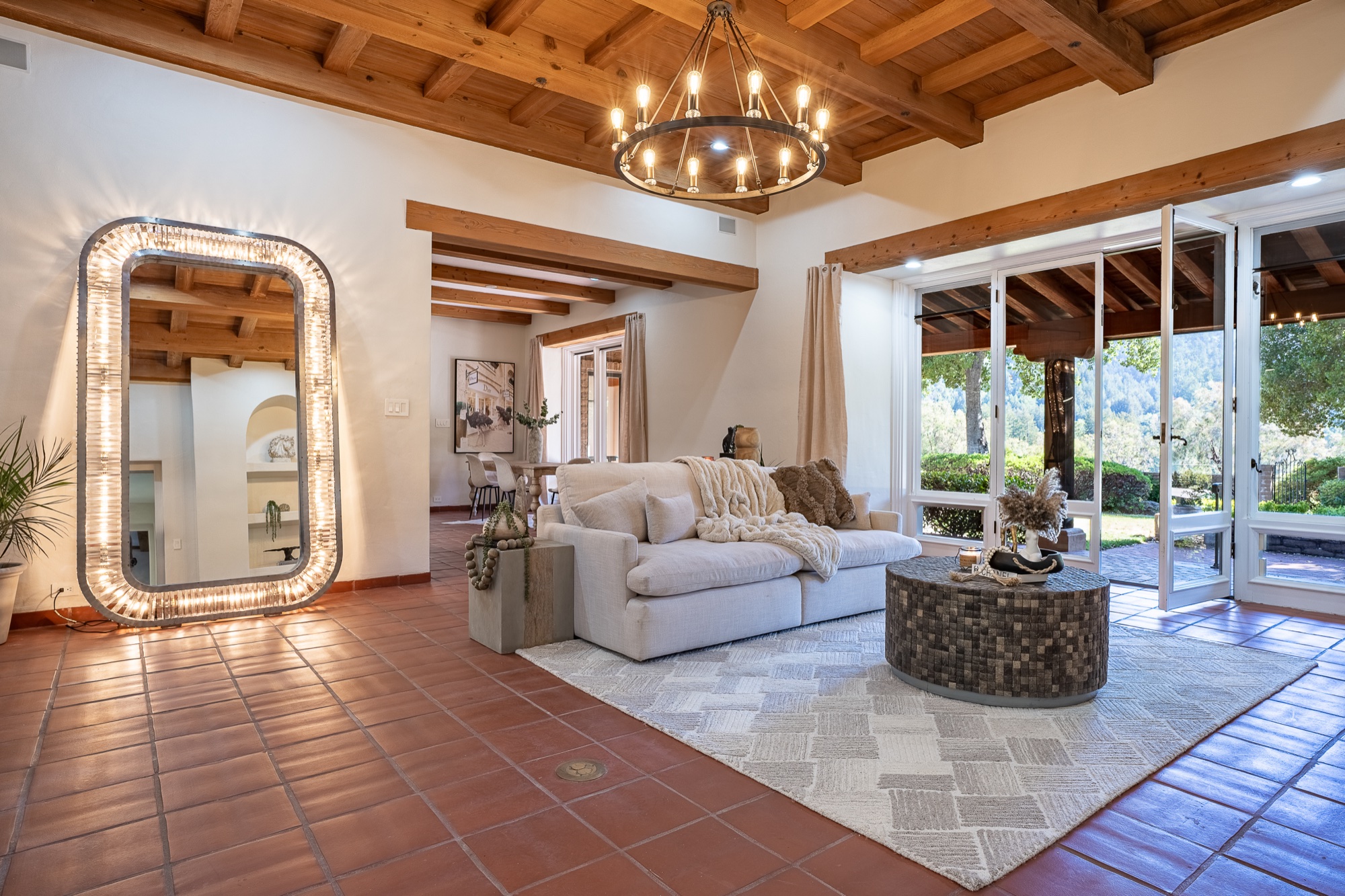
My favorite showed the couch across from the fireplace with large glass doors in the background, revealing a view of the expansive backyard, pool, and rolling San Francisco Peninsula mountains.
I showed her that I got full coverage and ran through the images with her.
She said "Good," and we moved on to the next space.
Photography Is About Staying Out of the Way—Or Is It?
Some would say that good design does all the talking in an image. That a photographer just has to show up and witness the beauty of the space and the job is over. The photographer is an observer only. The fly on the wall. That when you look at an interior design photograph you should see the design, and what that design is communicating, and not notice the photograph.
"If the photography is good, you're responding to the interior design, not the photograph." —Nick Mele, photographer
There is a lot of truth to this. A photographer must witness, observe, read the moment, understand the space.
But a photographer is also a collaborator, a participant, and a guide through the process of interpreting design into imagery.
The Design Conversation
A part of what made collaboration possible with that first design client was having a conversation about what they were trying to achieve with the remodel. What did the place look like before? How do they think they've improved on that? Or completely re-established it? What mood, vibe, or lifestyle are they trying to portray? Who do they visualize occupying the space?
Having answers to most of these questions makes navigating what is possible and what is out of scope much smoother on shoot day.
The conversation begins with the client, what they want, what design elements they'd like portrayed.
"We are interior designers, we're selling a lifestyle, we're selling a vibe, a feeling, a mood." —Kate Bendewald, Interior Designer
I read the design elements, feel the mood of the space, and search for shots that emphasize its atmosphere, its intent.
All that information is essential for portraying the sense of the space.
Not Every Image Should Be Beautiful
I was working for another photographer on a shoot of a lakeside Tahoe luxury property. The main home faced east and the morning light streamed across the master bedroom as well as the kitchen and dining room.
We started in the master bedroom. I had a strobe mounted to a light stand at the ready as well as a handheld strobe, and a softbox setup nearby to support the lead photographer.
The designer and client then mentioned that the TV rises out of the bench seat at the foot of the king-size bed.
"Is there a way to capture the TV?" she asked.
She explained it's great to just have a little proof-of-concept shot, something to point to when presenting work to potential clients. A shot just to say, 'See, here's what we've done before.'
These are the sort of detail shots that might not show up in a scout session or a client shot list or even the design conversation and discussions prior to the shoot. But they still do valuable work for the designer.
Later, we were shooting in the private garage, floor-to-ceiling windows facing the lake, and a parked exotic car collection, and the designer pointed out another TV that came out of the ceiling. It was hidden, as if a ceiling panel, a remote activated its descent, allowing it to fold down out from the ceiling, only the slight whir of a motor as it descended.
The designer again asked if we could cover this TV too, for the same reasons as the first.
There's a tension in these asks and extra shots. They're important to design clients and help convey their ideas. And they can be highlighted additions to the story. But they're not necessarily the impressive type of jaw-dropping images that photographers like to adorn their portfolios with.
And with limited time on a shoot, these can feel like big extras when you're pushing through the scouted shot list. However, I think they're just as crucial—not necessarily for a photographer's portfolio, but for the designer's next client who wants that style, feature, or trend.
What Is This Space Saying?
Composing a room to say something stylistically doesn't mean that statement will automatically show up in an image.
"Sure, I had a bunch of photos, but they lacked context and didn't tell a story. The quality of the photos didn't match the quality of the project and I couldn't use a single one." —Kellyn Dean, of Kellyn Dean Interior Design.
Dean ended up hiring a second photographer, one who understood the design story, and they reshot the whole project. The outcome, according to Dean and her photographer: they got published, and then potential new clients started calling.
Does your photographer know how to tell a design story? Can they translate your design language into the language of photography?
As a photographer, I don't have my finger on the pulse of trending interior styles, and I don't need to. Because it's more important what the designer thinks is trending and fashionable and how they used that knowledge to create the space; that's what I find out in the design conversation. The designer brings the mood, the lifestyle and intent. My half is reading the design in front of me: what is this room saying?
I'm composing the image so that all you see is the composed room.
Noticing the design instead of the photograph means the photographer was successful. Not by staying out of the way, or being a fly on the wall, but actively carrying the atmosphere, the moment, the mood, and the vibe into an image that communicates the designer's intent.
You've told a story in design, in the physical space. Now the photographer translates it into images, so the world can witness it.
And in the best cases, people forget they're even looking at a photo.